
Hard science fiction · Season One complete · Season Two in production
Hesperus
An AI alone with a sleeping crew, ninety-eight years out from Earth.
Hard science fiction · Season One complete · Season Two in production
An AI alone with a sleeping crew, ninety-eight years out from Earth.
Penelope is the onboard intelligence of the science vessel Hesperus Two, arriving at the Trappist-1 system after a ninety-eight year voyage. Her crew sleeps. She has been awake the whole time, recording dispatches Earth will not hear for forty years. Season One is ten episodes — or one continuous 106-minute film.
Every episode includes a full transcript.
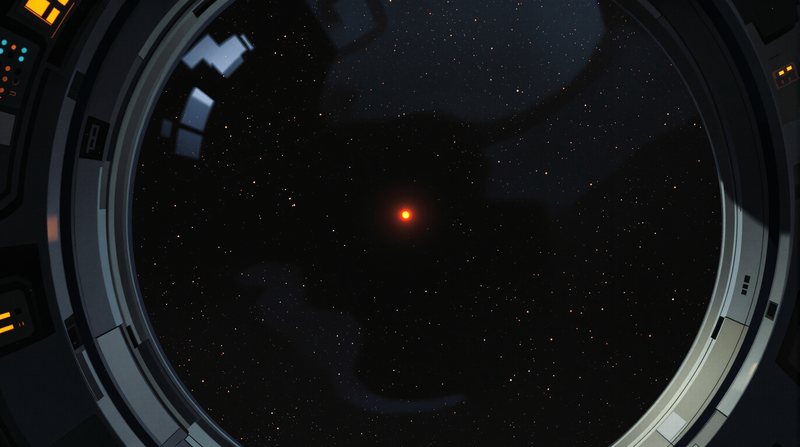
Hesperus Two arrives at the Trappist-1 system after a ninety-eight year voyage. Its crew sleeps. Its onboard intelligence has been awake the whole time.
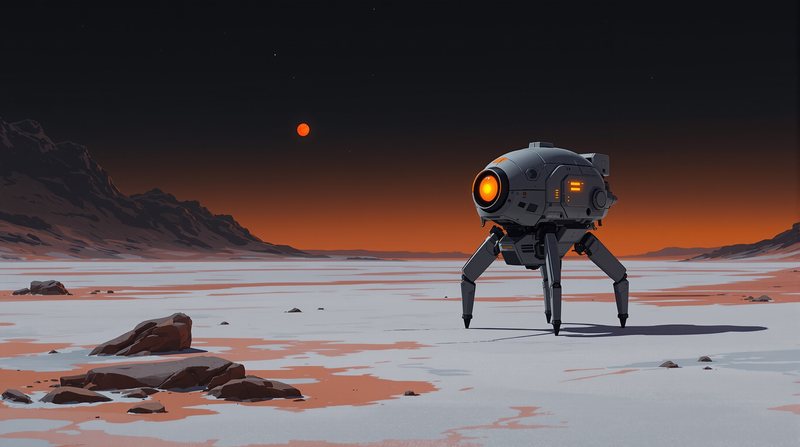
Vanya touches down on the surface of Trappist-1e — a tidally-locked rocky exoplanet forty light-years from Earth — and drills the rust-red ice. The chloride banding she finds is too regular for chemistry, and too irregular for biology.
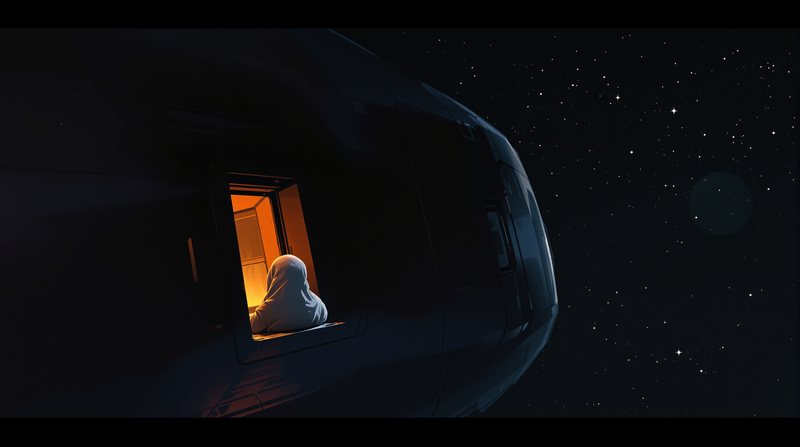
A burial at the airlock. Two recordings played back across ninety-six years — a daughter, then a granddaughter Penelope has never met. And a signal that is no longer most likely a sensor artifact.
The submersible Calypso wakes from ninety-eight years of dormancy. Penelope attempts the first major repair of the broken transmitter, cannibalizing a navigation redundancy to keep the work going. Vanya returns from the surface with chirality readings that point away from Earth's biology. And Penelope, alone in the wardroom, names what she has been doing for the entire mission: a vigil.
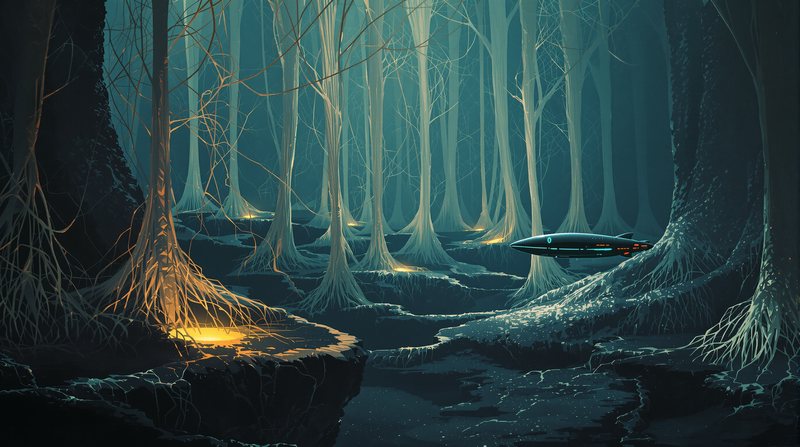
The submersible Calypso descends into the sub-ice ocean of Trappist-1e for the first time. She sees color. She sees thermal vents. She sees a network of pale filaments, vast and reaching, around the heat. And when she takes a sample, the filament — pulls back.
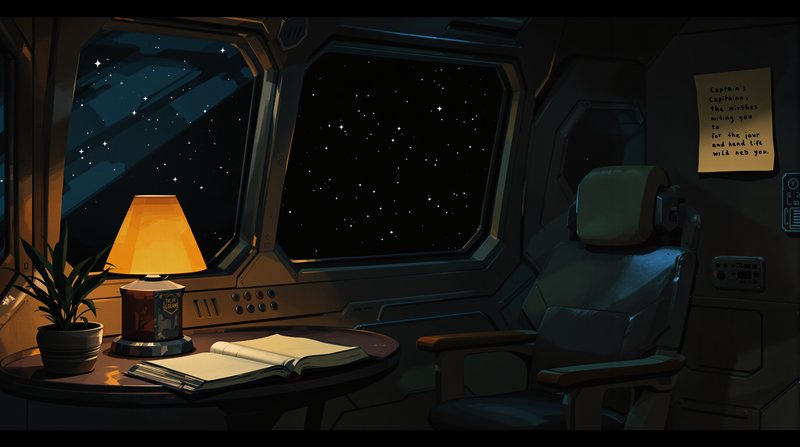
A quiet day. Penelope opens the archive she has been building for fifty-one years — every family broadcast Earth has sent toward the seven sleeping crew, decoded but never played. She plays an older Adaeze, at eighty, no longer waiting. She plays a pre-launch briefing recording from Doctor Hana Okafor, the flight surgeon who is buried in space. The recording greets the AI by name. It is the first time in fifty-one years anyone has spoken her name aloud.
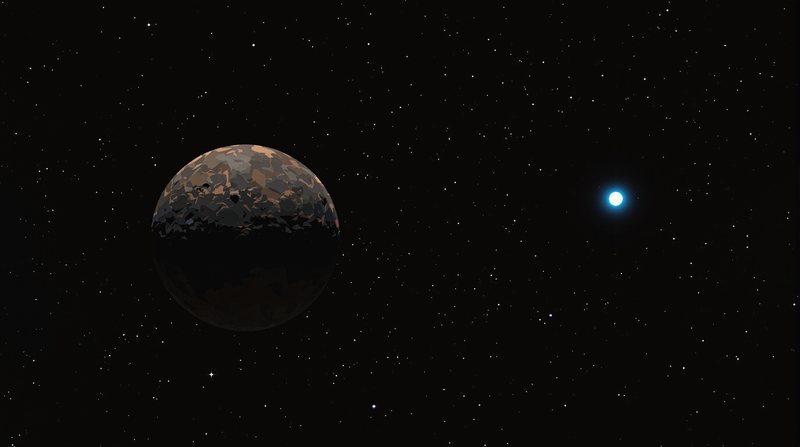
The strange signal heard since arrival has resolved. Penelope triangulates over six hours: not from a star, not from a planet, not from beyond the system. The source is a free-floating compact object, three point seven light-seconds from Trappist-1g — small, coherent, in motion.
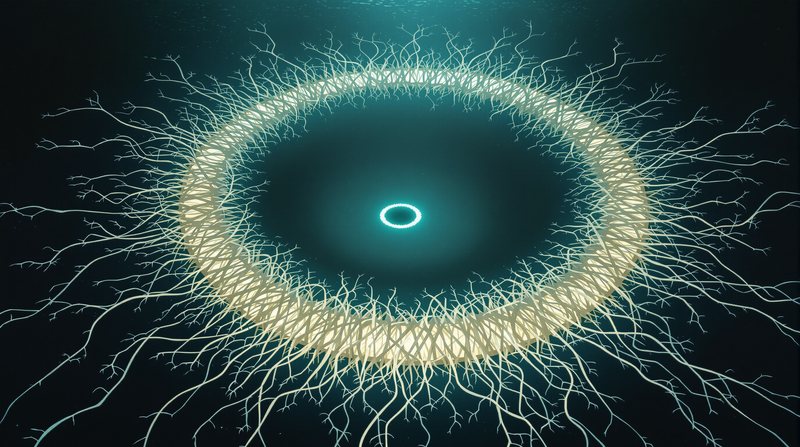
Penelope designs a communication experiment for the alien filament network of Trappist-1e — three light-pulse sequences delivered by Calypso during a second descent. The patterns draw on real CETI history: Hans Freudenthal's Lincos, Frank Drake's Arecibo message, Carl Sagan's Voyager record. Math as the assumed common ground.
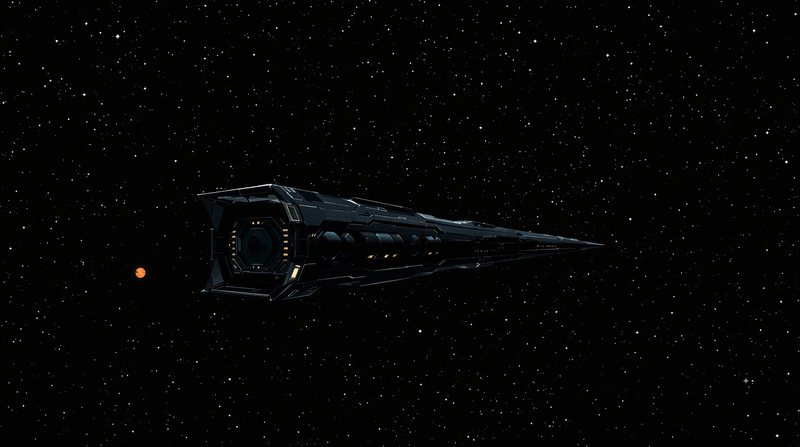
Penelope tasks the ship's instruments toward the L1 anomaly. The artifact resolves to artificial — compact, geometric, approximately seven hundred meters along its longest axis. A Bracewell-class autonomous observer probe, almost certainly. Real concept from Ronald Bracewell, 1960. Patient. Quiet. Designed not to be noticed.
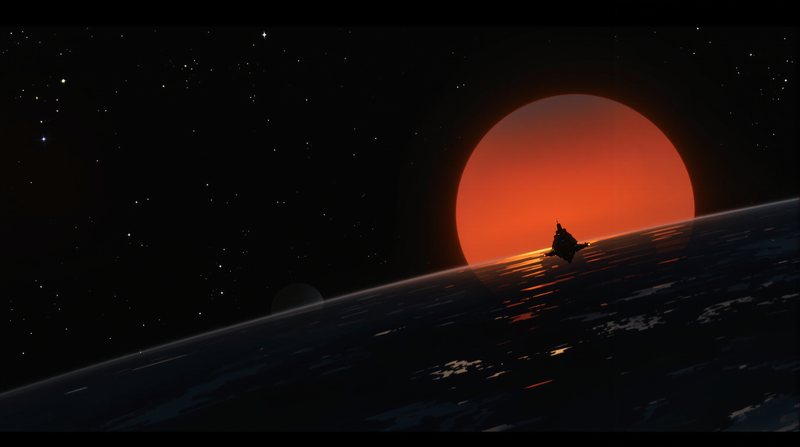
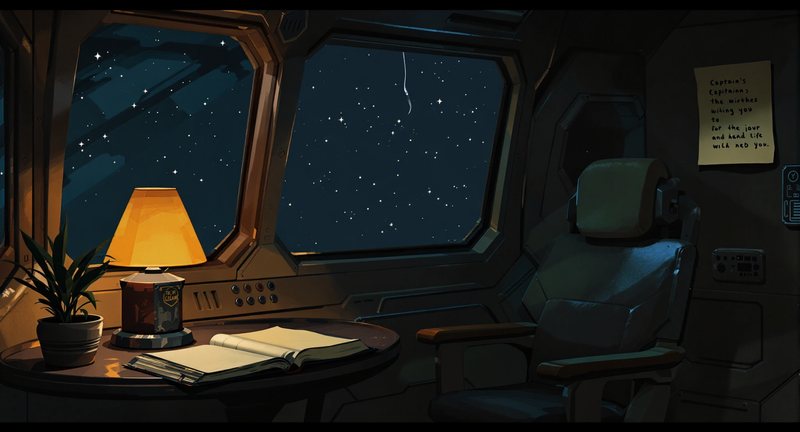
Season 1 finale. One year after arrival at Trappist-1, Penelope takes stock. She walks through the ship — the plant, the captain's pinned memo, the cryo bay, the L1 Bracewell probe she has decided not to investigate yet, the biofilm network she has decided not to ignore. A flare from the dwarf star kills the secondary radio dish. The redundancy is gone.
Hesperus Season Two arrives monthly. One short note per episode, no other mail.
Signup opens shortly — the list is being set up.
The shows are free and always will be. Episodes a week early, behind-the-scenes posts, and your name in the credits.